
Key Takeaways
- Bed bugs and carpet beetles can look similar, but they are different pests with different behaviors, appearances, and signs of activity.
- Carpet beetle larvae are commonly mistaken for bed bugs because their small, hairy bodies can resemble bed bug nymphs or other insect evidence.
- Skin marks alone cannot confirm a bed bug infestation, as reactions vary between people and carpet beetle larvae can also cause skin irritation.
- Inspecting for physical evidence, such as live insects, shed skins, stains, eggs, or fabric damage, is the best way to identify the pest.
- A professional inspection from Forest Pest Control can help accurately identify the pest and determine the appropriate next step for your home.
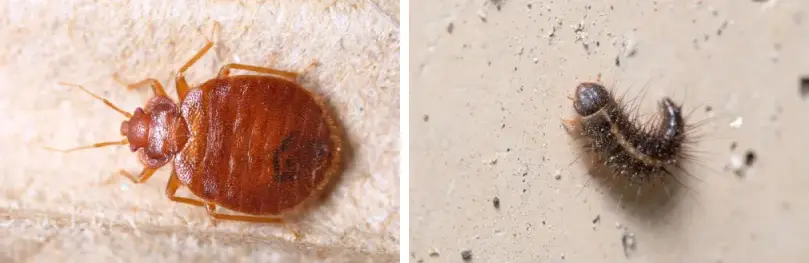
Finding a small bug in your bed, carpet, or furniture can be concerning, but not every insect is a bed bug. Carpet beetles are one of the most common pests mistaken for bed bugs because some life stages look similar and can be found in the same areas of the home.
Knowing the difference between bed bugs and carpet beetles can help you determine what type of pest you are dealing with and what steps to take next. Forest Pest Control helps homeowners throughout Central Florida identify and address pest problems with professional inspections and targeted solutions.
Bed Bug vs. Carpet Beetle: Key Differences
While bed bugs and carpet beetles can both be small and difficult to identify, there are several important differences between these pests.
| Feature | Bed Bugs | Carpet Beetles |
|---|---|---|
| Size | About 5-7 mm long, similar in size to an apple seed | About 3 mm long, usually smaller than bed bugs |
| Appearance | Flat, oval-shaped body with a reddish-brown color | Rounded or oval body with black, brown, white, or yellow patterns |
| Larvae | Small, pale versions of adult bed bugs | Hairy, caterpillar-like larvae with bristles |
| Where They Are Found | Mattresses, box springs, bed frames, furniture, and cracks nearby | Carpets, closets, fabrics, stored clothing, and areas with natural fibers |
| Evidence | Shed skins, dark spots, eggs, and live insects near sleeping areas | Damage to fabrics, shed larval skins, and larvae near food sources |
Why Are Bed Bugs Confused For Carpet Beetles?
The confusion usually happens because of carpet beetle larvae. Adult carpet beetles look very different from bed bugs, but their larvae are small, brownish, and covered with tiny hairs. They can sometimes be mistaken for bed bugs or bed bug nymphs.
Bed bug nymphs are smaller versions of adult bed bugs and may appear lighter in color before they mature. Bed bugs also shed their outer skin as they grow, and these shed skins can sometimes be mistaken for other insect evidence.
If you find an unfamiliar insect or shed skin, taking a clear photo or saving the specimen can help with proper identification.
What Should You Look For?
Before assuming you have bed bugs, inspect the area carefully and look for additional evidence. A single insect or skin irritation is not always enough to confirm an infestation. When inspecting your home, look for:
- Live Insects or Shed Skins: Look for live insects or shed skins around mattress seams, box springs, bed frames, and nearby furniture.
- Dark Spots or Stains: Small dark spots or stains on bedding, mattresses, or upholstery may be signs of bed bug activity.
- Carpet Beetle Larvae: Check carpets, closets, clothing, and stored fabrics for carpet beetle larvae or signs of activity.
- Fabric Damage: Damage to natural fibers such as wool, silk, leather, and other materials may indicate carpet beetle activity.
- Eggs or Insect Debris: Inspect cracks, crevices, and other hidden areas for eggs, shed skins, or insect debris.
If possible, take clear photos of anything you find or place the insect in a sealed container for identification.

Can Bed Bugs and Carpet Beetles Cause Skin Reactions?
Although bed bug bites can be a sign of an issue, skin marks alone are not enough to confirm a bed bug infestation. Reactions to bed bugs vary widely, and some people may show little to no reaction after being bitten.
Unlike bed bugs, carpet beetles do not bite people. However, carpet beetle larvae have small hairs that can irritate the skin when touched, causing reactions that may appear similar to insect bites.
The best way to determine if you have bed bugs is to look for physical signs of the pest rather than relying only on skin irritation.
What Not to Do Before Identifying the Pest
If you suspect you may have bed bugs, avoid taking actions that could spread the problem or make identification more difficult. Avoid doing the following:
- Moving Items Between Rooms: Avoid moving bedding, furniture, or personal belongings to other areas of the home, as this could spread the pest.
- Discarding Furniture Too Soon: Do not throw away mattresses or furniture before having the pest properly inspected and identified.
- Relying on Skin Marks Alone: Skin marks or irritation by themselves are not enough to confirm the presence of bed bugs or another pest.
- Treating Before Identification: Avoid using treatments before confirming which insect you have, as the wrong approach may not address the actual problem.
Proper identification is the first step toward choosing the right solution.
When Should You Schedule a Bed Bug Inspection?
If you notice signs of pest activity near sleeping areas or suspect you may have bed bugs, a professional inspection is the best way to confirm the issue. Physical evidence is needed to accurately determine what pest is present.
The experts at Forest Pest Control can inspect your home, identify the pest, and recommend the appropriate solution. Our experienced bed bug exterminators can help ensure your home receives the correct treatment based on an accurate identification.
Get Help Identifying Bed Bugs and Carpet Beetles in Central Florida
Whether you have found a suspicious insect in your home or need help determining if you have bed bugs or carpet beetles, Forest Pest Control is here to help. Our experienced team can inspect your property, identify the pest, and recommend the appropriate next steps to address the problem.
Reach out to Forest Pest Control for expert pest identification and thorough bed bug control services.
Back to Bed Bug Treatment