

Bed bugs are small, hidden pests that can be difficult to detect until an infestation has already started spreading. These insects are experts at hiding in cracks, seams, and other hard-to-reach areas, making a thorough inspection one of the most important steps when you suspect a problem.
Whether you recently traveled, purchased used furniture, or have noticed unexplained bites or marks on your bedding, knowing how to check for bed bugs can help you identify early warning signs and take action quickly.
Bed bugs are most commonly found near areas where people sleep, as they like to stay near their food source, but they can also spread to furniture, walls, and other areas of the home.
What Do Bed Bugs Look Like?
Bed bugs can be seen with the naked eye, especially when you know what to look for. Adult bed bugs are:
- Small Size: Adult bed bugs are typically about 5 to 7 millimeters long.
- Flat Body Shape: Flat, oval-shaped body that allows them to hide easily in cracks and seams.
- Reddish-Brown Color: Adult bed bugs are usually reddish-brown, although their color may change after feeding.
- Apple Seed Appearance: A full-grown bed bug is often compared to the size and shape of an apple seed
Young bed bugs, called nymphs, are much smaller and may appear pale or translucent. After feeding, bed bugs often become larger and darker, making them easier to spot.
How Do You Check for Bed Bugs?
Checking for bed bugs requires more than simply looking at your mattress. These pests are excellent at hiding, and they often stay close to where people sleep so they can feed at night.
Before starting your inspection, gather a few helpful tools:
- Flashlight for Better Visibility: A bright flashlight can help you see into dark areas, cracks, seams, and other hiding places where bed bugs may be difficult to spot.
- Magnifying Glass to Find Small Signs: A magnifying glass can make it easier to identify tiny eggs, shed skins, and other evidence that may be missed during a visual inspection.
- Gloves During Your Inspection: Gloves can help protect your hands while you examine mattress seams, furniture cracks, and other areas.
- Flat Tool to Check Tight Spaces: A credit card or similar tool can help you inspect narrow gaps, seams, and cracks where bed bugs may hide.
Move slowly and carefully during your inspection. Bed bugs are small, and their eggs and signs of activity can easily be missed.
Step-by-Step Guide
- Strip the bed and inspect your bedding.
Begin by removing all sheets, blankets, pillowcases, and mattress covers. Carefully examine your bedding for signs of activity.
Avoid shaking bedding because this can accidentally spread bed bugs to other areas. If you suspect an infestation, place bedding and clothing into sealed bags before washing.
- Check the mattress seams and edges.
The mattress is one of the most common hiding places because it provides easy access to their food source. Using a flashlight, inspect:
- Mattress seams
- Stitching
- Piping around the edges
- Corners and folds
- Mattress tags and labels
- Tears or openings in the fabric
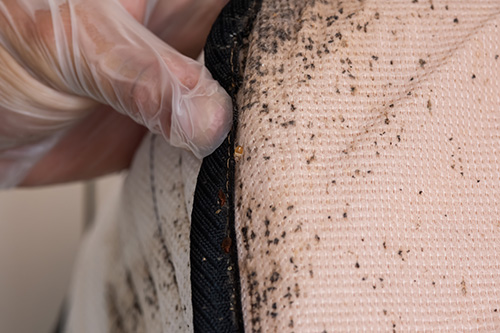
Pay close attention to areas around the edges of the mattress. Bed bugs often hide deep inside seams where they are protected and difficult to see.
- Inspect the box spring.
Many homeowners check their mattresses but overlook the box spring, which is another common hiding spot. Examine:
- The underside of the box spring
- Fabric coverings
- Wooden supports
- Corners and seams
- Stapled areas
- Openings or tears in the material
Because box springs contain many dark, protected spaces, they can provide an ideal environment to hide and reproduce.
- Check the bed frame and headboard.
After inspecting the mattress and box spring, examine the structure supporting your bed. Look carefully at:
- Cracks in wooden bed frames
- Screw holes
- Joints and connections
- Areas behind the headboard
- Spaces between the bed frame and the wall
Headboards, especially upholstered headboards, can provide additional hiding areas because they contain seams, fabric, and small spaces where bed bugs can remain hidden.
- Inspect nearby furniture and surrounding areas.
Bed bugs do not always stay on the bed. As an infestation grows, it can spread throughout the room and hide in nearby locations. Inspect areas such as:
- Nightstands
- Dressers
- Chairs and couches
- Furniture seams
- Baseboards
- Electrical outlets
- Behind pictures
- Loose wallpaper
- Wall cracks
Focus on areas close to beds, couches, and other places where people spend extended periods of time.

Signs of a Bed Bug Infestation to Look Out for
Finding a live bed bug is the clearest indication that you have an infestation, but these pests often remain hidden. In many cases, homeowners discover evidence of bed bugs before they ever see the insects themselves. During your inspection, look for these common signs:
- Live Bed Bugs
Finding a live bed bug is the most direct confirmation of an infestation, since these pests rarely travel alone and often signal others hidden nearby.
- Tiny White Bed Bug Eggs
Bed bug eggs are extremely small and can be difficult to spot without close inspection. They are typically white or translucent and about the size of a pinhead. Finding eggs is a strong indication that bed bugs are reproducing in your home.
- Shed Skins
As bed bugs grow, they shed their outer shells. These discarded skins are often found near their hiding places. Shed skins may appear:
- Pale yellow or tan
- Thin and shell-like
- Smaller than adult bed bugs
Finding multiple shed skins can indicate an active infestation.
- Rust-Colored Stains on Bedding
Small reddish or brown stains on sheets, pillowcases, mattresses, or furniture may be a sign of bed bug activity. These stains can occur when:
- Bed bugs are crushed after feeding.
- Blood spots are left behind during feeding.
- Insects leave behind residue in their hiding areas.
Identifying these stains early can help homeowners recognize the signs of a bed bug infestation and take action before the problem spreads.
- Black Fecal Spots
Bed bugs leave behind small dark spots caused by digested blood. These marks may look similar to tiny ink stains. You may find fecal spots on:
- Mattress seams
- Box springs
- Bed frames
- Bedding
- Furniture
These spots are one of the most common signs homeowners discover during an inspection.
- Musty Odor
Larger bed bug infestations may produce a sweet, musty odor. This smell comes from chemicals released by bed bugs and is typically more noticeable when many insects are present.
A musty odor alone does not confirm bed bugs, but when combined with other signs, it may indicate a problem.
What You Should Do If You Find Bed Bugs
Discovering bed bugs can be stressful, but taking the right steps can help prevent the infestation from spreading. If you find signs of bed bugs:
- Avoid Moving Items to Other Rooms: Moving furniture, bedding, or belongings throughout your home can accidentally spread bed bugs to new areas.
- Wash Bedding and Clothing: Wash and dry bedding, clothing, and other washable items using the hottest settings appropriate for the materials. Drying items on high heat can help kill bed bugs and their eggs.
- Vacuum Carefully: Vacuum mattress seams, furniture, cracks, baseboards, and surrounding areas. Immediately empty the vacuum contents into a sealed bag and dispose of it outside.
- Avoid Using Random Pesticides: Using the wrong products can make bed bugs more difficult to control. Some treatments only kill exposed insects while allowing hidden bugs and eggs to survive.
- Contact a Pest Professional: Bed bugs are difficult to eliminate because they hide in areas homeowners cannot easily access. A professional can inspect your home, identify the extent of the infestation, and recommend the appropriate treatment.
Frequently Asked Questions About Checking for Bed Bugs
Professional Bed Bug Inspections and Treatment in Central Florida
Finding evidence of bed bugs does not mean you have to deal with the problem alone. The sooner an infestation is identified, the easier it is to address before it spreads.
Forest Pest Control has helped homeowners throughout Central Florida with professional bed bug inspections and treatment solutions. Our trained technicians carefully inspect your home, identify areas of activity, and develop a treatment approach based on your specific situation.
Bed bugs can be persistent pests, but with the right knowledge and professional support, you can take back control of your home.
Contact Forest Pest Control today to schedule a professional bed bug inspection.
Back to Bed Bug Treatment