Chemical pesticides remain one of the most reliable tools homeowners can use to manage persistent insect problems when applied correctly, and this guide reveals which options work best for typical household pests. You will learn what chemical pesticides are, how they work, which active ingredients deliver consistent results in residential settings, and practical safety steps that protect children, pets, and the environment. This article integrates Integrated Pest Management (IPM) principles, regional considerations for Central Florida pest pressures, and clear decision rules for DIY versus professional intervention. We address product formulations, modes of action, and real-world application strategies so you can choose targeted treatments that minimize collateral impact while maximizing efficacy. Finally, we provide pest-specific recommendations and explain when a trained applicator should step in to resolve complex infestations or structural threats.
What Are Chemical Pesticides and How Do They Work in Home Pest Control?
Chemical pesticides are formulated substances designed to kill, repel, or regulate pests through toxicological effects on target organisms, and they function via immediate contact, ingestion, or by disrupting development. Understanding the mechanism—contact toxicity, stomach poisons, insect growth regulators (IGRs), systemic activity, and desiccant dusts—helps homeowners select the right product for specific pest biology. Proper selection reduces repeated treatments and limits harm to non-target organisms, which aligns with IPM goals of targeted, minimal chemical use. The following subsections describe common formulations and how those delivery forms map to pest behaviors and problem locations. After explaining formulations, the next section will focus on how specific pesticide actions match pest life cycles and behaviors.
What Types of Chemical Pesticides Are Commonly Used for Homes?
Homes typically see five primary formulation classes: liquid concentrates and ready-to-use sprays, aerosol spot treatments, granular perimeter products, baits and stations, and dusts such as diatomaceous earth or boric acid. Liquid concentrates are mixed and applied for perimeter barriers and large outdoor surfaces because they provide longer residual control, while ready-to-use aerosols are convenient for indoor spot treatments but usually have shorter persistence. Baits and stations exploit foraging behaviors—particularly effective for ants and cockroaches—because they deliver slow-acting toxicants that get transferred through social insects’ colonies. Granules are useful for soil treatments and lawns where systemic uptake or broad coverage is necessary, and dusts serve in voids, cracks, and dry indoor sites where moisture limits sprays. Understanding these formulation differences helps homeowners decide which delivery method fits the pest and location, which leads to choosing the correct active ingredient discussed in the next section.
Common formulation types and typical uses:
- Liquid concentrates: long-residual perimeter and foundation treatments.
- Ready-to-use sprays: indoor spot control and quick knockdown.
- Baits and stations: colony-level control for ants and roaches.
This list outlines typical homeowner options and clarifies where retail choices work best compared to professional tools; next we match mechanisms to pest behaviors.
How Do Chemical Pesticides Target Different Household Pests?

Different pests require different modes of action because behavior and biology determine exposure and vulnerability; for example, ants respond well to bait toxins while mosquitoes are controlled best with perimeter residuals and larvicides targeting aquatic larvae. Bed bugs are primarily contact and ingestion targets for dusts and residuals applied in cracks because their behavior brings them into treated harborage, whereas termites typically need soil treatments or baiting systems that interrupt colony structure and foraging. Understanding life cycles—egg, nymph/larva, adult—guides whether an IGR is necessary to block maturation or whether an adulticide will suffice for immediate relief. For indoor infestations, applying products into voids and crevices often outperforms broadcast spraying because targeted placement maximizes dose to the pest and reduces non-target exposure. Mapping pest biology to delivery method is essential before choosing an active ingredient, which we explore next.
Quick decision checklist for targeting pests:
- Identify pest species and life stage before selecting chemistry.
- Use baits for social insects that share food (ants, roaches).
- Apply residuals for perimeter pests and dusts for voids.
This checklist prepares homeowners to evaluate active ingredients with respect to pest biology in the following section.
Which Active Ingredients Are Most Effective for Home Pest Control?
Active ingredients differ by mode of action, residual life, and whether they are available at retail or restricted to licensed applicators; the most effective options combine appropriate chemistry with correct formulation and placement. Recent practical experience shows bifenthrin and other pyrethroids deliver reliable perimeter residual control for many nuisance insects, fipronil stands out for baiting and targeted treatments like ant and cockroach control due to its non-repellent properties, and insect growth regulators (IGRs) like methoprene or pyriproxyfen are indispensable for interrupting flea and cockroach reproduction. Homeowners should note that some high-efficacy products are labeled for professional, restricted use and require trained applicators to apply them safely and legally. The table below summarizes key actives, their modes, common formulations, and typical targets to guide selection and comparison.
This table clarifies how actives align with use cases; the following H3s expand benefits and considerations for specific key chemistries.
What Are the Benefits of Bifenthrin, Fipronil, and Pyrethroids?
Bifenthrin, a commonly used pyrethroid, provides long-lasting residual activity on exterior surfaces, making it effective for perimeter barriers against ants, spiders, and many crawling pests; its persistence reduces treatment frequency when applied to foundations and landscaping. Fipronil, though often used in professional baits or spot applications, is prized for its non-repellent transfer properties that allow treated individuals to contaminate nest mates—this makes it a powerful tool against social insects and localized structural pests. Broader pyrethroids deliver fast knockdown and flexible formulation choices for both indoor and outdoor use, but they may offer shorter persistence indoors and can trigger resistance in some pest populations, so rotating modes of action is important to maintain control efficacy. Safety considerations include label-directed re-entry intervals and avoiding broadcast indoor use that increases exposure risks to children and pets. Understanding these benefits and limitations helps homeowners decide when retail pyrethroids suffice and when a professional application of restricted products may be more appropriate.
This guidance leads naturally into how natural alternatives compare for those seeking lower-toxicity options.
How Do Natural and Organic Chemical Alternatives Compare?
Natural and organic options—such as essential oil formulations, spinosad, diatomaceous earth, and botanical extracts—offer reduced persistence and lower acute toxicity to people and many non-target species, making them attractive for eco-conscious homeowners and for spot treatments in living spaces. Spinosad acts on insect nicotinic acetylcholine receptors and can be effective against certain caterpillars and flea larvae when used in labeled formulations, while diatomaceous earth and boric acid work as desiccants or stomach poisons respectively and perform well in dry, enclosed cracks where they remain undisturbed. Essential oil products often provide rapid knockdown but generally lack the residual control of synthetic pyrethroids or bifenthrin, so they are best used as part of an IPM plan emphasizing sanitation, exclusion, and monitoring. For many homeowners, combining targeted natural products with non-chemical methods reduces overall chemical burden while maintaining acceptable control for low-level infestations. Evaluating these trade-offs helps determine when a synthetic residual or a professional-grade restricted product is justified, which is the subject of the next section.
Comparison summary:
Natural products: lower persistence, reduced non-target impact, good for spot treatment.
Spinosad and boric acid: effective for specific pests and life stages.
Synthetic residuals: higher persistence and broad-spectrum control, often needed for larger problems.
This comparative framing paves the way to examine DIY pros and cons next.
What Are the Pros and Cons of DIY Chemical Pesticides for Homeowners?
DIY chemical pest control offers clear advantages—lower immediate cost, quick response, and broad retail availability—but significant downsides include misapplication, inadequate placement, and failure to address root causes like exclusion and sanitation. Homeowners frequently use broadcast sprays that lose effectiveness because they do not reach the pest’s harborage or life stages, and label misreading or improper dilution leads to underdosing or unsafe exposure levels. When DIY works best is for small, well-defined problems such as a single ant trail or a limited flea problem tied to a pet, or isolated mosquito harborage without structural infestation; when infestations are widespread, structural, or involve resistant populations, professional intervention is usually the prudent choice. The pros and cons below provide a compact decision framework to assess whether to attempt DIY control or engage a trained applicator for targeted chemical use. After weighing these factors, the following subsections outline common homeowner safety mistakes and when to escalate to professional services.
- Cost and convenience: Immediate savings and quick purchase at retail stores.
- Effectiveness: Adequate for spot treatments and minor problems when used correctly.
- Risks: Misapplication, resistance development, and incomplete control for complex infestations.
This list frames typical homeowner expectations and leads to a closer look at safety pitfalls to avoid.
What Safety Risks and Common Mistakes Should Homeowners Avoid?
Common homeowner errors include over-application, mixing incompatible products, ignoring label instructions, and applying outdoor residuals indoors where ventilation and human exposure are higher; these mistakes increase health risks for children and pets and reduce treatment effectiveness. Misreading an EPA label or ignoring personal protective equipment recommendations frequently results in contact or inhalation exposures that could have been avoided by following dilution and PPE guidelines. Another frequent issue is reliance on knockdown-only products without follow-up sanitation or exclusion measures, which permits rapid re-infestation and fosters resistance over time. Homeowners should always read and follow the pesticide label as the law and primary safety guide, store chemicals in original containers out of reach of children, and avoid using products in ways not specified on the label. Addressing these safety concerns reduces risk and improves long-term outcomes, which helps determine when DIY is appropriate versus when professional help is required.
Homeowner safety checklist:
Read and follow label instructions precisely before any application.
Avoid mixing products unless explicitly allowed on labels.
Store pesticides in original containers and keep them secured from children and pets.
This checklist emphasizes actionable safety steps and transitions to criteria for calling a pro.
When Is DIY Pest Control Effective and When Is Professional Help Needed?
DIY methods are effective when infestations are localized, pest identification is certain, and the homeowner can apply products safely in target areas—examples include a single ant trail, a limited flea problem tied to a pet, or isolated mosquito harborage without structural infestation. Professional help is recommended for bed bugs, termites, large-scale cockroach infestations, and situations with potential structural damage or health risks because certified applicators use inspection-led plans, specialized equipment, and restricted-use products when necessary. Recurring problems despite repeated DIY attempts—such as reappearing ant colonies or persistent rodent-associated fleas—are reliable signals to escalate to a professional who can diagnose source points and apply integrated strategies. Central Florida homeowners should consider local pest ecology and humid-climate persistence; problems that rapidly rebound after treatment often require professional IPM-based interventions. These decision thresholds lead naturally into how professionals handle chemicals differently and why their approaches often outperform retail attempts.
Escalation criteria summary:
Recurring infestations after multiple DIY attempts.
Structural pests (termites, widespread bed bugs) or health-risk pests.
Situations requiring restricted-use products or specialized equipment.
With criteria established, next we explain professional application differences.
How Do Professional Pest Control Services Use Chemical Pesticides Differently?
Professional services combine diagnostic inspection, targeted application, access to certain concentrated or restricted-use products, and standardized safety protocols to deliver durable pest suppression while minimizing human and environmental exposure. Trained applicators apply pesticides based on species-specific behavior and habitat, placing baits, dusts, or residuals where pests actually contact them rather than broadcasting chemicals indiscriminately; they also employ calibrated equipment that ensures accurate dilution and placement to achieve labeled rates and consistent residuals. Professionals integrate chemicals into an IPM framework—pairing exclusion, habitat modification, and monitoring—so chemical use is minimized and more effective. Additionally, professionals adhere to regulatory requirements, personal protective equipment protocols, and containment measures that reduce off-target drift and runoff in sensitive Central Florida environments.
What Are the Advantages of Professional-Grade Chemical Treatments?
Professional-grade chemical treatments deliver advantages such as higher-concentration formulations designed for targeted placement, the ability to apply restricted-use actives by licensed applicators, and access to equipment and techniques—like crack-and-crevice dusting and sub-slab termiticide injections—that are beyond retail capability. These formulations often provide longer residual activity and better penetration into harborage areas, which reduces repeat applications and overall pesticide volume applied to the property. Professionals also provide accurate diagnosis of pest species and infestation extent, enabling treatment plans that address root causes rather than symptom-focused spot treatments. Safety benefits include trained applicators with appropriate PPE and containment procedures, documentation of products used, and compliance with label and regulatory requirements to reduce risks to occupants and the environment. Understanding these advantages clarifies when a homeowner should consider professional services instead of continued DIY attempts.
Professional advantages summary:
Access to concentrated and restricted-use products applied by licensed technicians.
Precise placement and equipment for durable control.
Integration of diagnostics and non-chemical measures.
This summary sets up the next subsection describing how an experienced local company customizes treatments.
How Does Forest Pest Control Customize Chemical Solutions for Central Florida Homes?
Forest Pest Control provides inspection-driven, IPM-centered plans tailored to Central Florida’s pest ecology, where humid conditions and diverse pest species require targeted seasonal strategies and careful product selection; their approach begins with a detailed inspection to identify species, entry points, and contributing environmental factors. Locally owned and operated, the company emphasizes knowledgeable experts, fast response, and comprehensive solutions for over 50 types of pests while operating on Integrated Pest Management (IPM) principles to minimize unnecessary chemical use and maximize long-term results. This local expertise helps technicians choose the correct active ingredient and formulation—whether targeted residuals for perimeter mosquito reduction, baiting strategies for ants, or dusting for void-dwelling pests—while respecting environmental sensitivities common to Central Florida properties. Forest Pest Control also positions its services as a bridge between DIY knowledge and licensed applicator capability, which is particularly valuable when restricted-use products or specialized equipment are required to protect homes effectively.
How customization benefits homeowners:
Inspection-based plans that prioritize exclusion and habitat modification.
Local pest ecology knowledge to select seasonally appropriate chemistries.
Integration with non-chemical measures for sustainable results.
This description demonstrates the local customization process and transitions into homeowner safety practices for applying pesticides.
How Can Homeowners Safely Apply and Handle Chemical Pesticides?
Safe pesticide use requires strict adherence to label directions, appropriate personal protective equipment for the application method, secure storage, and immediate actions for spills or accidental exposure to protect children, pets, and beneficial organisms. Homeowners should always treat the product label as the legal and technical guide, because the label prescribes concentration, application sites, PPE, and re-entry intervals that protect occupants. Employing targeted spot treatments, using bait stations instead of broadcast sprays indoors, and choosing lower-persistence options in living spaces all reduce exposure risk. The following H3 subsections provide a homeowner-friendly PPE checklist and practical tactics to minimize environmental impact when using chemical pesticides. After discussing PPE, the article will present environmental protection strategies that further reduce non-target harm.
What Personal Protective Equipment Is Recommended for Home Use?
Personal protective equipment (PPE) varies by formulation and application method but generally includes chemical-resistant gloves, eye protection, long sleeves and pants, and, for mixing or concentrated treatments, respiratory protection such as an appropriate respirator with organic vapor or particulate cartridges. For dust applications, a NIOSH-rated dust mask or filtering respirator helps prevent inhalation of fine particles, while gloves and eye protection guard against skin and mucous-membrane exposure for both sprays and dusts. Homeowners should also remove and launder clothing separately after applications and decontaminate mixing equipment according to label instructions to avoid secondary exposures. When label instructions require more protective measures—such as full-face respirators or coveralls—homeowners should defer to professionals who have the training and equipment to meet those requirements safely. Proper PPE use minimizes human risk and supports effective application, which informs environmentally protective steps discussed next.
PPE checklist and usage:
Chemical-resistant gloves for mixing and application tasks.
Eye protection and long-sleeved clothing for all spray and dust applications.
Respiratory protection for dusts and concentrated product handling.
The risks associated with chemical household products, including pest control agents, highlight the importance of understanding safety protocols.
Safety Risks of Chemical Household Products, Including Pest Control
Chemical household products, such as cleaning and washing products or pest control and garden chemicals, are frequently involved in poisonings in private households.
Barriers to the safe use of chemical household products: A comparison across European countries, A Bearth, 2020
How Can Environmental Impact Be Minimised When Using Chemical Pesticides?
Minimizing environmental impact starts with accurate identification and targeted application so chemicals are placed only where pests contact them, paired with habitat modification such as removing standing water, trimming vegetation away from foundations, and sealing entry points to reduce future reliance on pesticides. Avoid applying pesticides during bloom periods to protect pollinators, establish buffer zones near wells or storm drains, and time outdoor residual sprays for calm weather to minimize drift and runoff into sensitive areas. Use granular or bait formulations where appropriate to limit airborne particles, and prefer crack-and-crevice or localized treatments over broadcast applications to reduce total chemical load. Finally, document applications and keep pesticide containers secured and disposed of according to label instructions to prevent accidental environmental contamination. These steps combine to protect beneficial organisms and water quality while preserving the efficacy of chemical tools for genuine pest problems.
- Environmental minimization tactics:
Target treatments to pest harborage rather than broadcast spraying.
Avoid applications during pollinator foraging times and wet conditions.
Maintain buffer zones around water features and drainage areas.
Implementing these tactics allows homeowners to use chemicals responsibly and transitions to pest-specific product recommendations.
What Are the Best Chemical Pesticides for Specific Common Household Pests?
Matching pests to appropriate chemical strategies requires combining the right active ingredient, formulation, and placement with non-chemical tactics for lasting control; the table below maps common pests to recommended chemical approaches and clarifies professional versus DIY suitability. For ants, baits and targeted residuals often succeed; for mosquitoes, perimeter residuals and source reduction are essential; for fleas, combining IGRs with adulticides and treating pets and premises provides control. The following H3 subsections give specific combinations for groups like ants, mosquitoes, fleas, and more challenging pests such as bed bugs, cockroaches, and termites. After the pest table, the text provides practical expectations for efficacy and when specialized equipment or restricted products are needed.
This table clarifies best-practice pairings; the next sections expand on treatments for common pest groups and the likelihood that professional involvement will be required.
Which Chemical Treatments Work Best for Ants, Mosquitoes, and Fleas?
For ants, slow-acting baits that workers carry back to colonies are often the most effective retail-level option because they target the colony rather than just killing foragers; combining baits with exterior residuals at entry points can shorten the timeline to control. Mosquito control focuses on source reduction and perimeter residuals—bifenthrin and certain pyrethroids provide effective residual barriers when applied to vegetation, structural undersides, and other resting areas, while larvicides in standing water interrupt breeding cycles. Flea control requires a multi-pronged approach: treating the pet directly, applying an IGR to indoor and yard areas to stop pupae and larvae from maturing, and using an adulticide in heavy infestations to reduce immediate biting pressure. Homeowners should expect that ant and mosquito issues can often be managed with correct DIY placement and persistence, while fleas tied to pets or heavy outdoor reservoirs may require coordinated treatments with veterinarians or professionals. Clear expectations on efficacy help homeowners select the right mix of products and tactics.
Treatment combos and expectations:
Ants: baits plus targeted residuals for comprehensive control.
Mosquitoes: perimeter residuals plus larval source management.
Fleas: synchronized pet treatment, IGR use, and environmental adulticide for severe infestations.
These combinations help homeowners plan effective interventions and indicate when to call a pro.
What Are Effective Chemical Solutions for Bed Bugs, Cockroaches, and Termites?
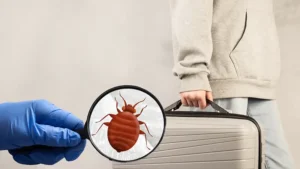
Bed bugs and termites typically require professional treatment because of complex harborage, resistance issues, and structural implications; bed bug control often combines residual insecticides, desiccant dusts, heat treatments, and meticulous inspection to reach hidden eggs and nymphs. Cockroaches respond well to integrated baiting strategies and crack-and-crevice dusting—fipronil-based baits and boric acid dust remain staples—but heavy infestations or populations with bait aversion may need professional diagnosis and rotation of modes of action. Termite control is inherently structural and can involve trenching and soil-applied termiticides, baiting systems that target colony elimination, or localized treatments for isolated galleries; licensing and specialized equipment typically make professional application the legal and practical route. For these pests, the combination of chemical tools, monitoring, and exclusion measures administered by trained technicians produces the highest probability of durable elimination. Recognizing the limits of retail products for these high-risk pests can prevent wasted time and expense.
Professional vs DIY expectations:
Bed bugs: professional multi-modal treatments are usually required for complete eradication.
Cockroaches: baits and dusts work well; persistent infestations may need pros.
Termites: structural treatments and baiting require licensed applicators.
Understanding these distinctions prepares homeowners to escalate appropriately; next we examine IPM as the overarching framework.
How Does Integrated Pest Management Guide Safe Chemical Pesticide Use at Home?
Integrated Pest Management (IPM) is a decision-making framework that prioritizes identification, monitoring, exclusion, cultural controls, and targeted chemical use only when thresholds indicate the need, thereby reducing unnecessary pesticide applications and improving outcomes. IPM begins with accurate pest identification and inspection to establish thresholds—levels at which intervention is warranted—and then applies a hierarchy of non-chemical tactics such as sanitation, habitat modification, exclusion, and biological control before resorting to chemicals. When chemicals are used within IPM, they are selected for specificity, minimal non-target impact, and integration with other tactics; rotation of modes of action is used to delay resistance. For homeowners, following IPM means fewer blanket treatments, lower chemical loads, and longer-lasting control through addressing the factors that enabled infestations. The following subsections define IPM components and explain how IPM reduces chemical use while maximizing effectiveness for household pest problems.
What Is IPM and Why Is It Important for Home Pest Control?
IPM is a structured approach that emphasizes prevention, monitoring, and the use of multiple tactics in a prioritized order to manage pests sustainably; it is important for homes because it minimizes chemical exposure to people and pets while addressing root causes of infestations. Core IPM components include inspection and identification, regular monitoring, exclusion measures (sealing entry points), sanitation (removing food and water sources), and targeted interventions only when thresholds are exceeded. By relying on evidence from monitoring, homeowners avoid unnecessary applications and can choose the least disruptive control methods that are still effective. IPM also supports resistance management by encouraging rotation of chemical classes and reduced reliance on single-mode treatments. Understanding IPM empowers homeowners to make informed decisions that balance immediate control needs with long-term prevention.
IPM core steps:
Identify the pest and assess infestation level.
Implement sanitation and exclusion measures.
Use targeted chemical controls only when monitoring shows threshold exceedance.
These steps form the basis for reducing chemical reliance, which we expand on next.
How Does IPM Reduce Chemical Usage While Maximizing Effectiveness?
IPM reduces chemical usage by emphasizing interventions that remove pest resources and entry points, thereby lowering population growth and making chemical applications more impactful when they are necessary; targeted placement, timing, and selection of products maximize effect per unit of chemical used. Monitoring allows homeowners to apply spot treatments instead of broad applications, and combining IGRs with adulticides targets multiple life stages to shorten treatment timelines. Rotation of active ingredients and alternating delivery methods reduces resistance risks and preserves the efficacy of available chemistries. For complex or high-risk pests, professionals using IPM perform thorough inspections and execute focused treatments, which often require fewer follow-ups than unsystematic DIY spraying. Employing IPM principles ensures that chemical interventions are strategic, efficient, and less likely to cause unintended consequences.
IPM tactics to minimize chemicals:
Monitor and treat only when justified by thresholds.
Target treatments to harborage and vulnerable life stages.
Combine non-chemical and chemical tactics to reduce dependency on pesticides.
These approaches prepare homeowners to recognize when professional involvement is the best next step, which we address in the final section.
When Should Homeowners Contact Forest Pest Control for Chemical Pest Treatments?
Homeowners should contact a professional when infestations are widespread, when structural pests (like termites or extensive bed bug cases) are involved, or when DIY attempts have failed repeatedly—these scenarios require inspection-driven plans, specialized equipment, or restricted-use products to resolve effectively. Specific red flags include visible structural damage, repeated reappearance despite correct DIY applications, health-related exposures (e.g., bed bug bites across multiple rooms), and the presence of pests that pose disease risks or require complex remediation. For residents who prefer expert assistance, contacting Forest Pest Control connects them with locally oriented technicians who emphasize inspection-driven IPM strategies and comprehensive solutions for more than 50 pest types while balancing safety and efficacy. If you determine the situation meets these escalation criteria, the company can assess the problem and recommend a tailored plan that may incorporate professional-grade chemistries and non-chemical controls.
What Signs Indicate That Professional Chemical Control Is Needed?
Look for these clear signs that professional chemical control is warranted: persistent or expanding infestations despite multiple DIY attempts, sightings of multiple active nests or galleries, evidence of structural damage such as mud tubes or wood frass, bed bug sightings in multiple rooms or repeated bites after home treatments, and infestations that coincide with health symptoms or allergic reactions. Urgent scenarios include rodent-borne flea spikes, visible termite damage, and infestations in multi-unit buildings where spread to neighbors is likely and legal or safety obligations may apply. When these red flags appear, professional diagnosis identifies the infestation extent, underlying causes, and the most effective combination of interventions—often including restricted-use products or specialized application techniques that homeowners should not attempt. Recognizing and acting on these signs early prevents escalation and reduces long-term treatment costs.
Prioritized warning signs:
Recurrence after correct DIY treatment and sanitation.
Structural damage or evidence of colony activity.
Health impacts or multiple-room infestations.
These indicators guide homeowners toward obtaining professional assessment and treatment options, which we describe in the next subsection.
How Can Homeowners Get a Free Quote or Consultation from Forest Pest Control?
To request a consultation, homeowners should prepare basic information about the infestation—pest type observed, locations and frequency of sightings, approximate duration, and any prior treatments used—so technicians can provide an informed preliminary assessment and schedule an on-site inspection if needed. Forest Pest Control operates as a lead-generation and information hub with locally owned and operated service orientation, emphasizing knowledgeable experts, fast response, comprehensive solutions for over 50 types of pests, and IPM-based procedures that tailor chemical use to the situation. During the consultation process, expect a technician to perform a thorough inspection, identify contributing conditions such as moisture or landscape issues, and present treatment options that balance chemical and non-chemical tactics based on the inspection findings. For homeowners who decide to proceed, the company documents the recommended plan, discusses expected outcomes and timelines, and coordinates follow-up monitoring and preventive steps.
What to have ready for a consultation:
Photos or descriptions of pests and affected areas.
Notes on prior treatments and rainfall or landscape changes.
Access instructions and scheduling preferences.
This final checklist ensures homeowners get an efficient, inspection-led quote and sets expectations for the professional treatment process.