
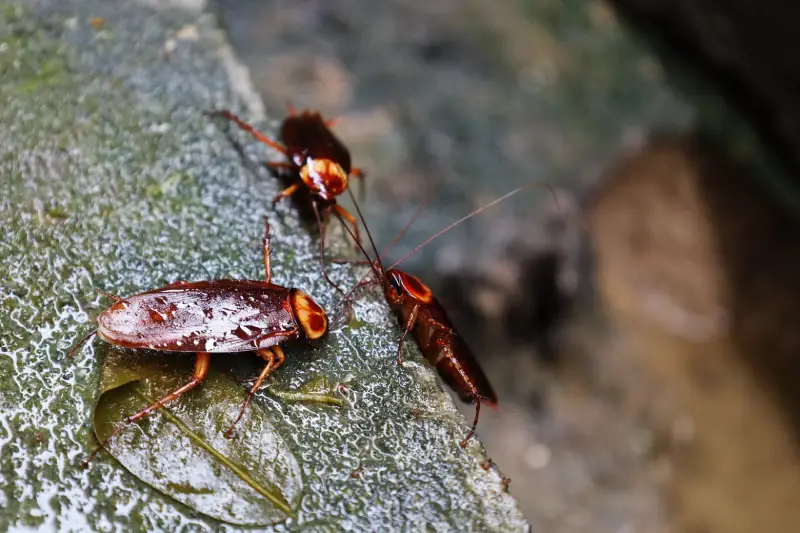
Florida’s warm, humid climate and abundant waterways create the ideal environment for cockroaches to thrive, reproduce, and invade homes year-round. While dozens of species inhabit the state, distinguishing between harmless outdoor strays and high-risk indoor pests is the most critical step toward effective pest control.
Below, we break down the ten most common roach species in Florida, how to identify them, and what to do if you spot one.
Key Takeaways:
- Not all cockroaches pose the same threat, with local species ranging from severe health risks to completely harmless outdoor dwellers.
- Distinguishing between indoor breeders and accidental outdoor strays dictates whether a situation requires immediate professional extermination or simple preventative maintenance.
- Cockroaches often leave behind subtle physical warning signs that reveal a hidden population long before a live insect is ever spotted.
- Accurately identifying the exact cockroach species is the most critical first step in determining the proper treatment strategy.
So, let’s discuss the most common cockroaches in Florida and what you need to know about them.
Top 10 Florida Cockroaches – Jump to a Species:
- German Cockroaches
- American Cockroaches
- Smokybrown Cockroaches
- Brown-Banded Cockroaches
- Oriental Cockroaches
- Florida Woods Cockroaches
- Asian Cockroaches
- Australian Cockroaches
- Surinam Cockroaches
- Banana Cockroaches
What Are the Most Common Cockroaches in Florida?
Dozens of cockroach species live in our region, but if you come across one, it’s most likely to be one of these. We’ve organized these by threat level, ranging from rapidly reproducing and filth-spreading German cockroaches to outdoor-only species that present no threat at all.
| Cockroach Species | Threat Level | Primary Behavior & Impact |
| German Cockroach | Extremely High | Primary indoor pest; breeds exponentially in kitchens and bathrooms; major food contamination hazard. |
| American Cockroach | High | Persistent invader; breeds in plumbing, sewers, and basements; vector for foodborne pathogens. |
| Smokybrown Cockroach | High | Structural invader; colonizes attics, soffits, and wall voids; requires targeted perimeter treatments. |
| Brown-Banded Cockroach | High | True indoor pest; targets dry, elevated spaces like upper cabinets, warm electronics, and light fixtures. |
| Oriental Cockroach | Moderate | Thrives in cool, damp areas (drains, basements); sluggish movement and slower indoor reproduction rate. |
| Florida Woods Cockroach | Low | Outdoor wood dweller; enters structures accidentally; dies off quickly and cannot establish infestations. |
| Asian Cockroach | Low | Outdoor garden species; strong flyer attracted to interior lights; unable to breed or survive indoors. |
| Australian Cockroach | Low | Mulch and yard inhabitant; occasional stray invader with negligible risk of structural colonization. |
| Surinam Cockroach | No Threat (Outdoors Only) | Soil-burrowing plant pest; poses risks to greenhouse roots and potted plants, zero threat to buildings. |
| Banana Cockroach | No Threat (Outdoors Only) | Outdoor foliage dweller; attracted to porch lighting; cannot adapt to indoor microclimates. |
High-Risk Roaches in Florida
If you’re dealing with any of these high-risk cockroach species in Central Florida, we recommend reaching out and scheduling roach control services as soon as possible. Our experienced cockroach exterminators will perform a full inspection and recommend your best course of action.
German Cockroach
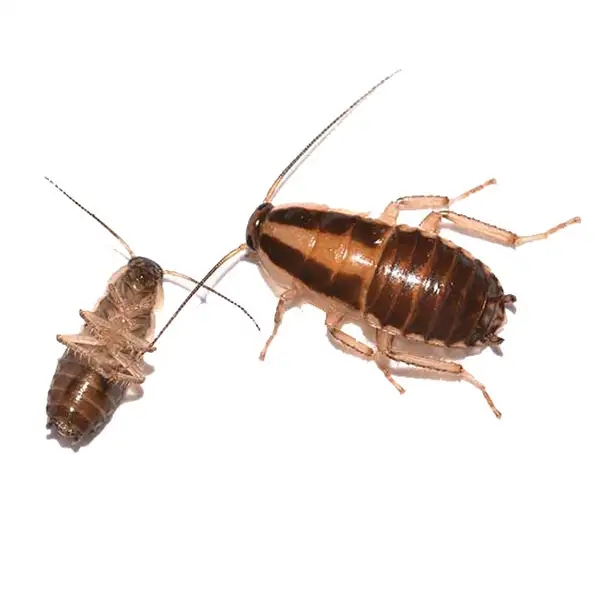
If you have “small roaches in your house,” it’s most likely German cockroaches. German cockroaches are the most common type of roach problem we see, and arguably, one of Florida’s most severe household pest, living exclusively indoors alongside human food and water. Getting rid of German cockroaches is challenging, but doable. Unlike outdoor species that wander inside by accident, these roaches rapidly colonize cabinets, appliances, and wall voids. Spotting even one during the day usually signals a large, hidden infestation.
What to Do About It: Call a professional immediately; store-bought sprays usually scatter the colony deeper into walls.
Identification: Small (½ inch), tan to light brown, with two dark parallel stripes running behind the head.
Where to Find Them: Kitchen cabinets, behind refrigerators, under sinks, and inside warm electronics.
Risk Factors: Extremely high; multiplies rapidly, triggers asthma/allergies, and spreads pathogens like Salmonella.
American Cockroach
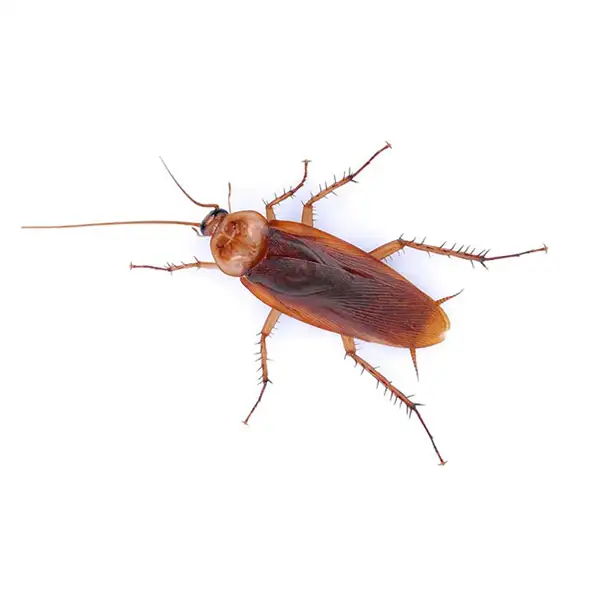
Sometimes referred to locally as the “palmetto bug,” the American cockroach is a massive invader that thrives in sewers and damp outdoor spaces. Heavy summer heat and rain frequently drive them indoors searching for moisture. While they rarely establish indoor nests, their size and mobility make them alarming home invaders.
What to Do About It: Seal pipe penetrations, fix plumbing leaks, install door sweeps, and apply perimeter barriers.
Identification: Large (up to 2 inches), reddish-brown with a pale yellowish figure-eight pattern on the head shield.
Where to Find Them: Sewers, basements, crawl spaces, utility rooms, and exterior mulch beds.
Risk Factors: High; tracks bacteria from drain pipes onto food surfaces and induces panic with clumsy flight.
Smokybrown Cockroach
Smokybrown cockroaches are tree-hole dwellers that readily invade Florida homes through rooflines, eaves, and vents. Moisture-sensitive and nocturnal, they actively seek out dark, humid microclimates like attics and soffits. Once inside, they can establish persistent colonies in upper structural levels.
What to Do About It: Trim tree branches 3 feet back from the roof, screen attic vents, and treat soffit voids.
Identification: Uniform mahogany-brown to black with a shiny shell (1.5 inches) and long, fully developed wings.
Where to Find Them: Attics, tree hollows, soffits, roof eaves, and damp garden mulch.
Risk Factors: High; strong flyers attracted to lights, contaminating attics with droppings and recurring invasions.
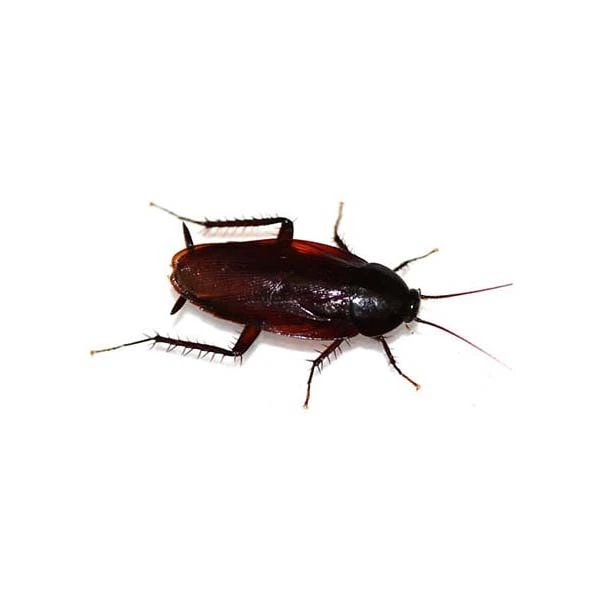
Brown-Banded Cockroach
Unlike most species, the Brown-Banded cockroach prefers warm, dry, elevated indoor locations. They nest at eye level or higher, hiding behind picture frames, inside upper cabinets, and within heated electronics. Because they do not rely on plumbing moisture, infestations often go undetected until populations surge.
What to Do About It: Reduce cabinet clutter, inspect electronics, and apply targeted gel baits in dry hiding spots.
Identification: Small (½ inch), light brown with two pale, uneven transverse bands across the body.
Where to Find Them: Upper kitchen cabinets, behind wall art, ceiling corners, and inside appliance motors.
Risk Factors: High; contaminates high-touch items and thrives inside dry, air-conditioned spaces.
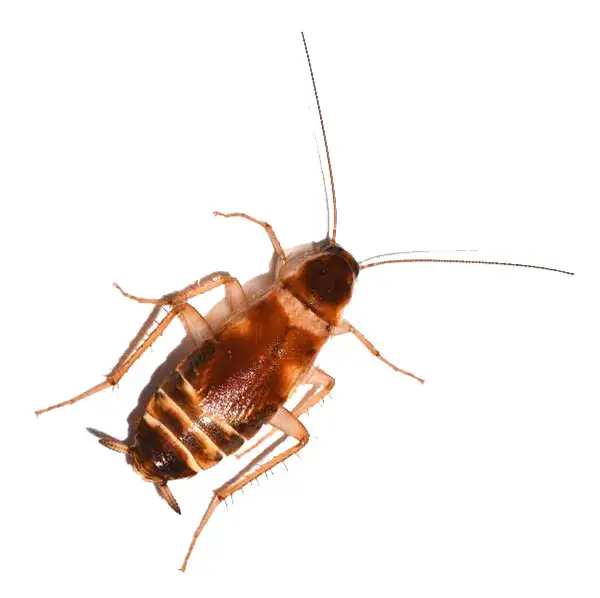
Oriental Cockroach
Often called “waterbugs,” Oriental cockroaches are sluggish, moisture-obsessed insects that frequent cool, damp areas. While less common in Florida than northern states, they readily colonize crawl spaces, floor drains, and foundation beds. They rarely nest in main living areas, but their filthy habits pose sanitary risks.
What to Do About It: Dehumidify damp areas, clean floor drains, and clear thick leaf litter away from the foundation.
Identification: Dark reddish-brown to shiny pitch-black (1 inch) with a stocky body; females are wingless.
Where to Find Them: Drains, cool basements, damp crawl spaces, leaf piles, and decaying organic matter.
Risk Factors: Moderate; emits foul odors and spreads filth, though it reproduces much slower than German roaches.
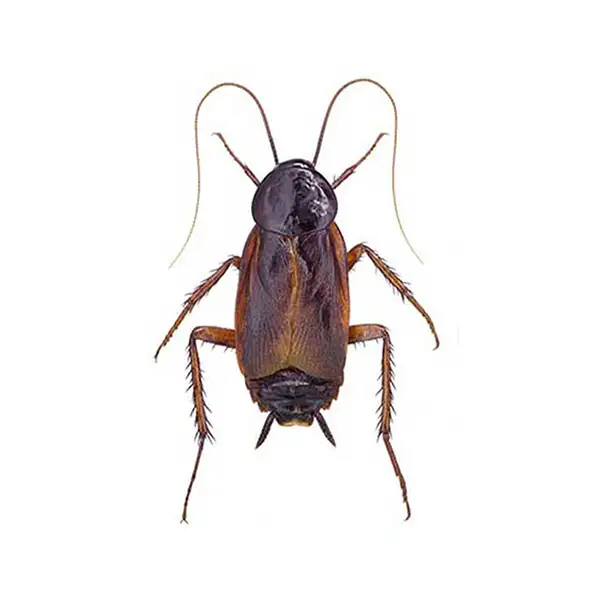
Low-Risk Cockroach Species in Florida
If you spot any of these species in your house, you probably shouldn’t worry. It’s likely a one-off that wandered inside and became lost or disoriented. Feel free to solve the problem with a store-bought spray or a shoe, and feel confident that you’re not dealing with a bigger issue.
Florida Woods Cockroach
Native to Florida, this heavy-bodied insect is the original “palmetto bug” and prefers damp, quiet outdoor leaf litter. Wingless and slow-moving, any appearance indoors is purely accidental, as dry air quickly dehydrates them. Their primary defense mechanism is releasing a foul-smelling liquid when disturbed.
What to Do About It: Sweep wandering strays back outside, elevate firewood, and maintain a dry gravel barrier strip.
Identification: Large (1.5 to 2 inches), shiny dark mahogany to black, with tiny non-functional wing stubs.
Where to Find Them: Leaf litter, decaying logs, tree stumps, under pavers, and occasionally garages or porches.
Risk Factors: Low; dies quickly indoors and cannot infest structures, though it emits a harsh stench if crushed.
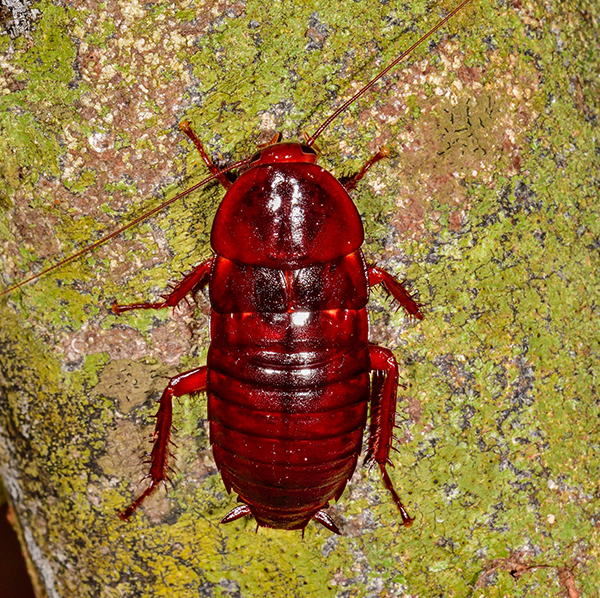
Asian Cockroach
The Asian cockroach looks virtually identical to the German cockroach but behaves like a typical outdoor insect. Thriving in shaded yards and gardens, it is a strong flyer heavily drawn to porch lights and windows at night. While it frequently flies indoors, it cannot breed or survive inside homes.
What to Do About It: Swap porch lights for yellow bug bulbs, seal window screens, and avoid over-mulching near doors.
Identification: Small (½ inch), light brown with two dark head stripes; identical to German roaches but with longer wings.
Where to Find Them: Shaded lawns, mulch beds, leaf litter, and fluttering around outdoor light fixtures.
Risk Factors: Low; creates evening swarms around patio lights, but poses zero risk of indoor structural infestation.
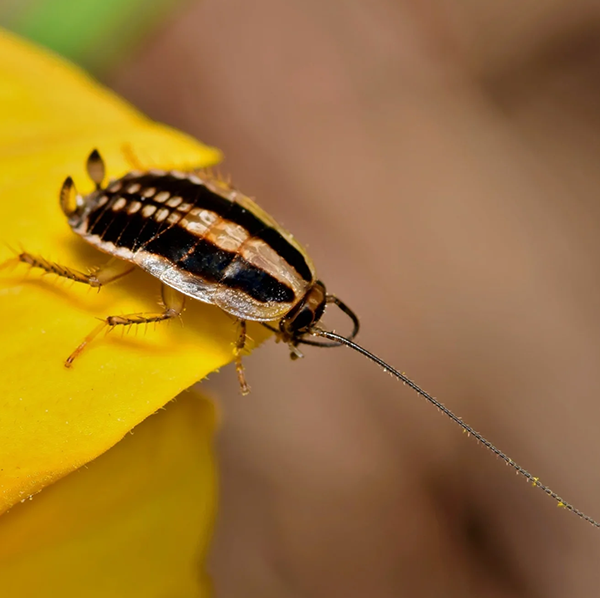
Australian Cockroach
Naturalized throughout tropical Florida, the Australian cockroach lives primarily in garden mulch and tree bark. It resembles an American cockroach in size but prefers feeding on outdoor plants and decaying wood. Weather shifts occasionally drive them indoors through cracks, but they rarely breed inside.
What to Do About It: Seal gaps around doors and windows, pull mulch 12 inches from walls, and apply perimeter granules.
Identification: Large (1.25 to 1.5 inches), reddish-brown with distinct yellow stripes along the outer front wing edges.
Where to Find Them: Gardens, greenhouses, mulch beds, tree bark, and woodpiles.
Risk Factors: Low; can chew garden foliage and cause minor indoor contamination if strays repeatedly enter.
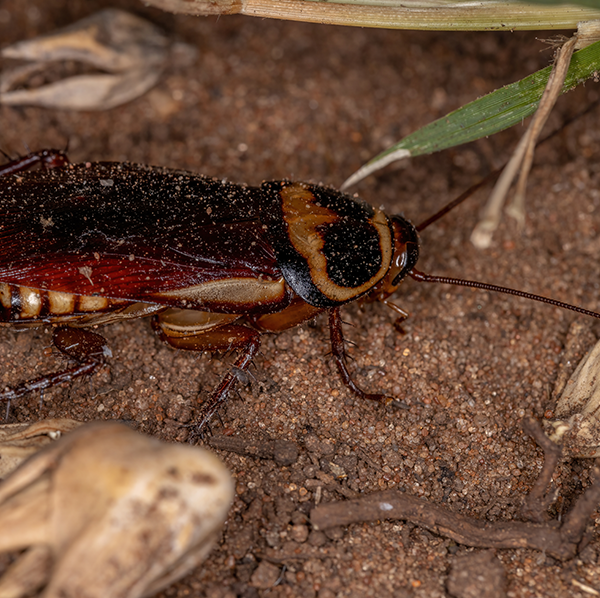
No-Risk Cockroach Species in Florida (Common Outdoor-Only Roaches)
If you spot any of these species in your house, you probably shouldn’t worry. It’s likely a one-off that wandered inside and became lost or disoriented. Feel free to solve the problem with a store-bought spray or a shoe, and feel confident that you’re not dealing with a bigger issue.
Surinam Cockroach
The Surinam cockroach is a burrowing plant pest that spends its life underground in moist soil. You will almost never see this roach running across a kitchen floor; instead, it hitchhikes indoors inside potted plants. They reproduce without mating, meaning a single roach in potting soil can multiply and damage plant roots.
What to Do About It: Inspect soil before bringing potted plants inside, repot infested plants, and treat garden beds.
Identification: Medium-sized (1 inch), shiny dark head with a stocky oval olive-green to brown body.
Where to Find Them: Moist garden soil, compost piles, lawn thatch, and potted plant dirt.
Risk Factors: No structural threat; damages garden roots, greenhouse crops, and potted house plants.
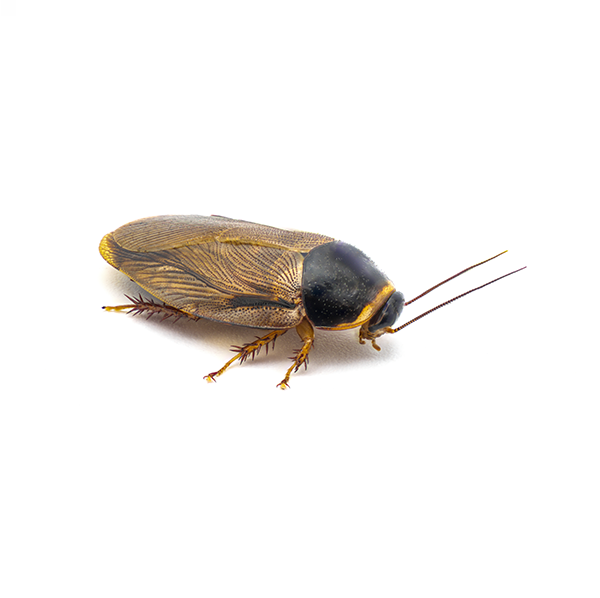
Banana Cockroach
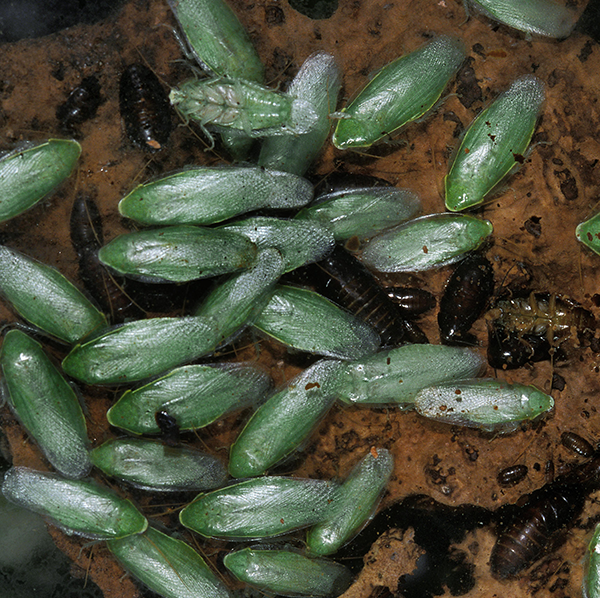
Also known as the Cuban cockroach, this tropical outdoor species is easily recognized by its vibrant green color. Living high in tree canopies and garden foliage, it is a strong flyer drawn to exterior lighting. While it occasionally flies through open doors at night, it cannot adapt to indoor environments.
What to Do About It: Keep exterior doors shut after dark, turn off porch lights, and escort strays back outside.
Identification: Medium-sized (1 inch), bright pale green with semi-translucent wings.
Where to Find Them: Tropical foliage, shrubs, palm trees, and fluttering near outdoor lights.
Risk Factors: No structural threat; completely harmless, unable to breed indoors, and strictly a stray night intruder.
What If You Suspect an Infestation But Don’t See Live Roaches?
Sometimes, evidence of a cockroach infestation shows up before you spot any actual live cockroaches. If you spot any of these warning signs, it may be a sign that you’re dealing with more than what is immediately visible. We recommend performing a closer inspection or calling a roach exterminator to take a look for you.
- Droppings resembling black pepper, coffee grounds, or small cylindrical pellets
- Dark brown, oblong egg capsules (oothecae)
- Translucent shed exoskeletons
- Dark, oily smear marks along baseboards and walls
- Persistent musty, oily odor
- Chewed cardboard, paper, or food packaging
Is a Palmetto Bug a Cockroach?
Yes, “palmetto bugs” are cockroaches and the term may refer to a few species. Throughout the southeast, people often call American cockroaches and smokybrown cockroaches “palmetto bugs.” Here in Florida, the Florida woods cockroach is very common and is also referred to as a “palmetto bug.”
People may refer to any type of cockroach as a palmetto bug, although it’s generally more accepted that “palmetto bugs” are the large outdoor types of cockroaches that occasionally make their way indoors – not the smaller indoor cockroach species like German cockroaches.
Is a Water Bug a Roach?
“Water bug” or “waterbug” is another generic term many people use for the large kinds of roaches that live outdoors and occasionally come inside. However, “waterbug” may also be a generic term for many other kinds of insects that aren’t roaches.
Need Help with a Cockroach Infestation?
Spotting a cockroach — whether it’s an urgent indoor threat like a German roach or an alarming invader like an American palmetto bug — is frustrating and stressful. Relying on store-bought sprays often backfires by scattering pests deeper into your wall voids and cabinet crevices.
At Forest Pest Control, we take the guesswork out of roach extermination. Our licensed local exterminators know the exact habits, nesting behaviors, and vulnerabilities of Florida’s unique roach species, allowing us to stop infestations at the source.
Why Homeowners Trust Forest Pest Control:
- Precise Inspection: We identify the exact species, locate hidden nesting sites, and evaluate secondary infestation signs.
- Targeted Extermination: We deploy commercial-grade gel baits and specialized treatments that wipe out entire colonies rather than just surface strays.
- Long-Term Prevention: We seal exterior access points and establish a protective perimeter barrier to ensure roaches don’t return.
Ready to reclaim your peace of mind? Contact Forest Pest Control today to request your comprehensive home inspection.
Back to Cockroach Control