
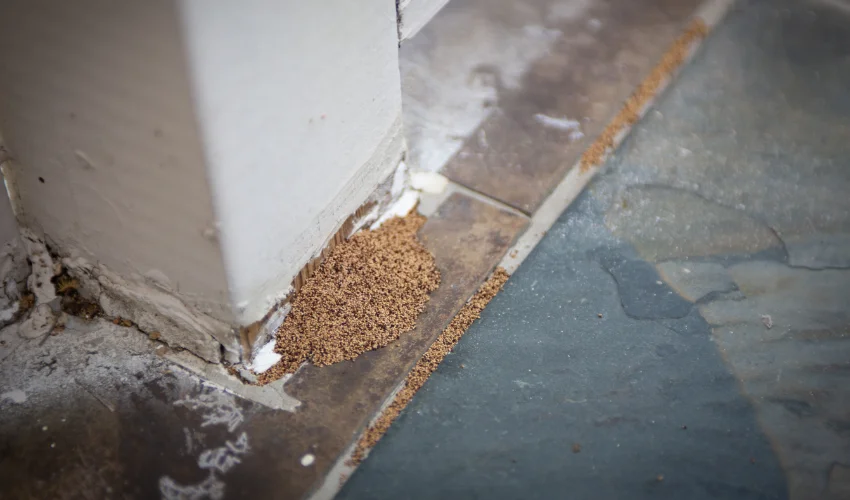
When Florida homeowners think about termites, many think of one thing: swarms.
You see flying termites around the house, find discarded wings near a window, and suddenly termites are on your radar. But when the swarm disappears, it can be tempting to think the threat has passed.
Unfortunately, that’s one of the biggest misconceptions we see in pest control.
In Florida, termites can remain active long after the most noticeable swarming periods. And two termites Florida homeowners should be especially aware of are Formosan subterranean termites and Eastern subterranean termites.
No Swarm Doesn’t Mean No Termites
A termite swarm is a reproductive event. It is not the only time termites are active, and an established colony can continue feeding and causing damage without homeowners seeing obvious signs.
In fact, much of a subterranean termite colony’s activity happens where you can’t see it—underground, inside walls, around plumbing penetrations, and in other concealed areas of the structure.
That means waiting until you see termites flying around your home isn’t a good termite prevention strategy.
“I Have a Block Home, So I Can’t Get Termites”
This is another misconception we hear regularly. A concrete block home is not termite-proof.
Termites don’t have to eat the concrete blocks to cause a problem. They can use small openings, cracks, plumbing penetrations, expansion joints, and other pathways to reach materials they can feed on.
Block homes still contain plenty of cellulose-based materials, including roof components, framing, trim, cabinets, drywall paper, and other building materials.
In our experience at Forest Pest Pros, some of the biggest termite problems we encounter are actually in block homes. The construction can also allow termite activity to remain concealed, making professional inspections particularly important.
Formosan vs. Eastern Subterranean Termites
Both species deserve attention, but Formosan subterranean termites are an especially serious concern because they can develop very large colonies and cause significant structural damage.
Eastern subterranean termites are also a major Florida pest. Like Formosan termites, they typically live underground and travel between the soil and a structure in search of food.
Neither requires you to see a swarm before a colony can be affecting your home.
This is why identifying the termite involved—and understanding how the structure was previously treated—is important when determining the right approach.
What Does a Termite “Bond” Actually Mean?
We receive many calls from homeowners who tell us:
“My termite company raised the price of my bond. Can Forest just take it over?”
This is where there’s often some confusion.
What homeowners commonly call a termite bond is generally tied to a termite treatment and an ongoing warranty or service agreement with the company that performed the work.
Changing companies isn’t necessarily as simple as transferring that coverage.
If another company performed the original treatment, a new pest control company may not know exactly what product was used, how it was applied, when the treatment occurred, what areas were treated, or what conditions and exclusions are included in the existing agreement.
Those details matter because taking over a termite warranty can also mean taking on responsibility for a treatment another company performed.
For that reason, Forest may need to inspect the property, review any available treatment records and determine whether a new treatment or another course of action is appropriate before offering new coverage.
Why Is a Yearly Termite Inspection Required?
If your termite service includes continuing warranty coverage, an annual inspection isn’t just another appointment. It’s an important part of maintaining that coverage.
Homes change over time. Moisture problems can develop. Landscaping can change. Cracks can appear. Additions and renovations can alter previously treated areas. Conditions around the structure can also create new opportunities for termite activity.
A yearly inspection gives the pest control professional an opportunity to look for evidence of termite activity and identify conditions that could affect the home’s termite protection.
It also allows the company providing the warranty to regularly evaluate the property it is agreeing to cover.No annual inspection can mean no extension of the warranty, depending on the terms of your agreement.
That’s why homeowners should understand exactly what their termite warranty covers, what is required to keep it active, and when their next inspection is due.
Does a Termite Treatment Last Forever?
No termite treatment should simply be assumed to protect a home forever.
The appropriate treatment and retreatment schedule depends on factors including the product and treatment method used, property conditions, changes to the structure, and the terms of the termite program.
For some subterranean termite services, a new treatment may be recommended around the 8- to 10-year mark. Your pest control professional should evaluate the home’s treatment history and current conditions rather than relying on age alone.
If you don’t know when your home was last treated—or what was used—that’s worth finding out.
Don’t Wait for Termites to Announce Themselves
Florida’s warm, humid environment means termite awareness shouldn’t end when the most obvious swarm activity does.
Remember these three things:
- You can have termites without seeing a swarm.
- Concrete block homes can still have serious termite problems.
- A termite bond or warranty isn’t necessarily something another company can simply “take over.”
If you’re unsure about your home’s termite protection, can’t remember when it was last treated, have questions about an existing termite warranty, or have noticed something suspicious, a professional termite inspection is a good place to start.
At Forest Pest Pros, we can evaluate the property, look at the home’s termite history when records are available, and help you understand what protection makes sense for your home.
Because when it comes to Florida termites, what you don’t see can be just as important as what you do.