
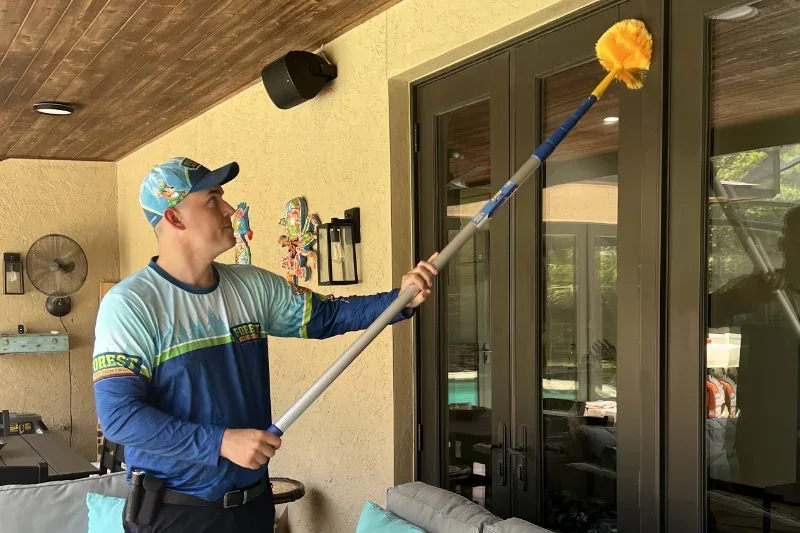
A professional pest inspection should help answer three basic questions: What is causing the problem, where is the activity coming from, and what should be done next?
The exact inspection will depend on whether the concern involves household pests, termites, rodents, or wildlife. However, a good inspection should involve more than briefly looking at the area where something was seen.
The Inspection Begins With Your Observations
Homeowners often provide the first useful clues. The inspector may ask:
- What have you seen or heard?
- Where and when did you notice it?
- How frequently is it happening?
- Have you found droppings, wings, damage, or nesting material?
- Has the problem changed following heavy rain, construction, landscaping, or another event?
- Have previous treatments been performed?
Even small details can help narrow down the likely pest and determine which areas require closer attention.
What Does a Pest Inspector Look For?
Depending on the concern and accessibility of the property, an inspector may look for:
- Live or dead insects
- Droppings and nesting materials
- Damage to wood or other building materials
- Pest trails and harborage areas
- Moisture and other conducive conditions
- Gaps around doors, vents, pipes, and utility penetrations
- Openings along rooflines, soffits, crawl spaces, or exterior walls
- Tracks, rub marks, chewing, or other wildlife evidence
- Areas providing food, water, or shelter
Not every pest will be visible during the appointment. Inspectors frequently rely on the evidence pests leave behind and their knowledge of pest behavior to identify the likely source.
Household Pest Inspections
When ants, cockroaches, spiders, silverfish, or other household pests are involved, the inspection may focus on areas providing food, water, shelter, or access to the structure.
These areas may include kitchens, bathrooms, garages, accessible attic areas, plumbing penetrations, exterior foundations, landscaping near the home, screened patios, and other likely harborage areas.
Correct identification matters because pests that appear similar may have different nesting habits and require different treatment strategies.
Subterranean Termite Inspections Require Specialized Knowledge
Subterranean termites generally remain concealed while traveling between their colonies and the wood or other cellulose materials they consume. An inspector may look for shelter tubes, damaged wood, swarmers, discarded wings, moisture conditions, and other evidence of current or previous activity.
Forest Pest Control specializes in subterranean termite inspections, treatments, and protection, including both Eastern and Formosan subterranean termites.
Formosan subterranean termites are especially important to identify correctly because their colonies can become very large. Their activity may require a carefully planned treatment and ongoing monitoring approach. Our team understands the different signs and behavior associated with these termites and knows where to look for shelter tubes, moisture conditions, damaged wood, swarmers, discarded wings, and other possible evidence.
An inspection does not always reveal active termites. It may instead identify moisture or other conditions that make the property more conducive to subterranean termite activity. The inspector should clearly distinguish active evidence from conducive conditions and explain the significance of each finding.
If treatment is recommended, homeowners should receive an explanation of the available options and understand whether the proposed protection includes retreatment coverage, repair protection, or both.
Rodent and Wildlife Inspections
When noises, droppings, odors, or damage suggest rodent or wildlife activity, the inspection should evaluate both the animal and how it may be entering the structure.
Potential inspection areas may include accessible attics, rooflines, soffits, vents, crawl spaces, garages, exterior walls, and other vulnerable locations.
The inspector may look for:
- Droppings
- Nesting materials
- Tracks or rub marks
- Chewed materials
- Damaged vents or soffits
- Gaps and accessible entry points
- Areas that may provide food, water, or shelter
Addressing an animal without correcting the way it entered may allow the same animal—or another one—to return. When appropriate, exclusion work may be recommended to help close accessible entry points and reduce the likelihood of future intrusion.
Will Every Area Be Inspected?
An inspector can only evaluate areas that are safely and reasonably accessible. Construction features, stored belongings, insulation, height, roofing conditions, or restricted spaces may limit access.
A professional should explain any areas that could not be inspected and whether additional access or evaluation may be necessary.
What Happens After the Inspection?
After evaluating the property, the inspector should explain:
- What evidence was found
- Which pest or animal is most likely involved
- Where the activity may be coming from
- Any conducive conditions or entry points observed
- Whether treatment or exclusion work is recommended
- What the proposed service includes
- What the service will cost
- What follow-up or warranty coverage is provided
If there is not enough evidence to make a positive identification, the inspector should say so. Monitoring, collecting a specimen, or returning when activity is present may be more appropriate than guessing.
Preparing for Your Inspection
You can help by leaving evidence in place until it can be examined. If possible, take photographs, note the time and location of the activity, or safely save an insect specimen in a sealed container.
Avoid cleaning away every sign immediately before the appointment. Droppings, discarded wings, damaged materials, and other evidence may help the inspector determine what is happening.
Schedule a Free Inspection
If you are seeing pests, finding unexplained damage, hearing activity in the attic, noticing possible termite evidence, or finding wildlife entry points, Forest Pest Control can help determine the appropriate next step.
Our fully licensed team will inspect accessible areas of the property, explain what we find, and discuss the available options without unnecessary pressure.
Call 844-3-FOREST (844-336-7378) to schedule your free inspection.
Forest Pest Control: The Best in Your Neck of the Woods.