

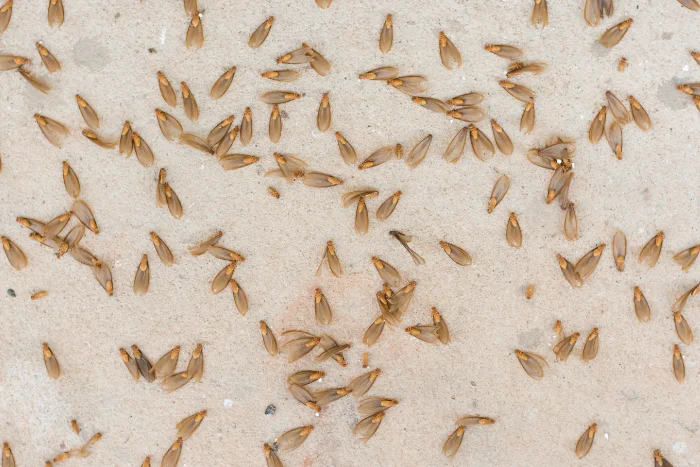
A termite swarm happens when a mature termite colony produces “swarmers” (winged reproductive termites) that leave the colony to start new colonies.
As a homeowner in Florida, it can be jarring to see termites swarming inside or around your home but it is a common occurrence in neighborhoods during swarming season. Swarming usually occurs during warm, humid weather. Typically in spring and early summer, often after a rain.
The important thing is understanding what swarming means, what to look for next, and when it’s time to have a professional inspection performed.
In Florida, the most common swarming subterranean termites are:
- Formosan subterranean termites
- Eastern subterranean termites
Does Seeing a Termite Swarm Mean Your Home Has Termites?
Not always, but it can. Seeing a swarm near your home could mean any of the following:
- A termite colony is inside the structure
- A colony is very close nearby
- The swarmers were simply attracted to the lights of your home and entered from outside
If termites are swarming inside the home, especially repeatedly, it is something you should take seriously and have inspected to be certain there isn’t a larger termite issue. Preventive treatment and catching a problem early will save you time and money. Annual inspections are advised for our service area.
Why a Preventative Termite Inspection for Your Home Matters
A mature subterranean termite colony may take years to develop to the point where it produces swarmers. If this is something that you are seeing, it could mean that the problem has been growing for years without you knowing. Once they are mature enough to swarm, there can be an extremely large number of termites in the colony.
Even if termites are not currently attacking your home, swarming activity nearby can indicate:
- Favorable termite conditions in the area
- Active colonies close to the structure
- Increased future risk if the home is unprotected
Preventative steps to protect your home can also include:
- Reducing moisture around foundation
- Repair leaks in and around the home
- Storing wood piles away from home
- Schedule annual inspections or preventative control

Other Signs of a Termite Infestations to Watch For
- Hollow-sounding wood when tapping
- Crumbing wood
- Mud Tubes
- Discarded wings from the swarming termites
- Peeling paint resembling water damage
What To Do If You See a Termite Swarm Inside Your Home
- Save a sample if possible for your pest control operator to determine the species
- Vacuum or clean up the swarmers
- Avoid disturbing potential mud tubes
- Call Forest Pest Control – we are happy to answer any questions
- Schedule a professional termite inspection
- Monitor for repeat activity.
Questions to Ask Before Hiring a Termite Company
- What type of termites are common in my area?
- Do you offer preventative treatments?
- What treatment methods are available?
- Is there a warranty?
- Is the warranty retreat-only or repair coverage?
- How often are inspections required?
- What conducive conditions should I correct?
Final Thoughts on Termite Swarms
Termite swarms are common in warm climates so many of us grow used to seeing them in Florida, but they shouldn’t be ignored. We encourage you to speak with a local pest control expert if you are continuing to see swarming activity. Be sure to ask them all the important questions, schedule and inspection and keep your home safeguarded with preventive services.
Contact us today to learn more about our termite protection services and schedule a free termite inspection. We’re here to answer any questions you may have and help you find the right solution to protect your home.